


Mô tả
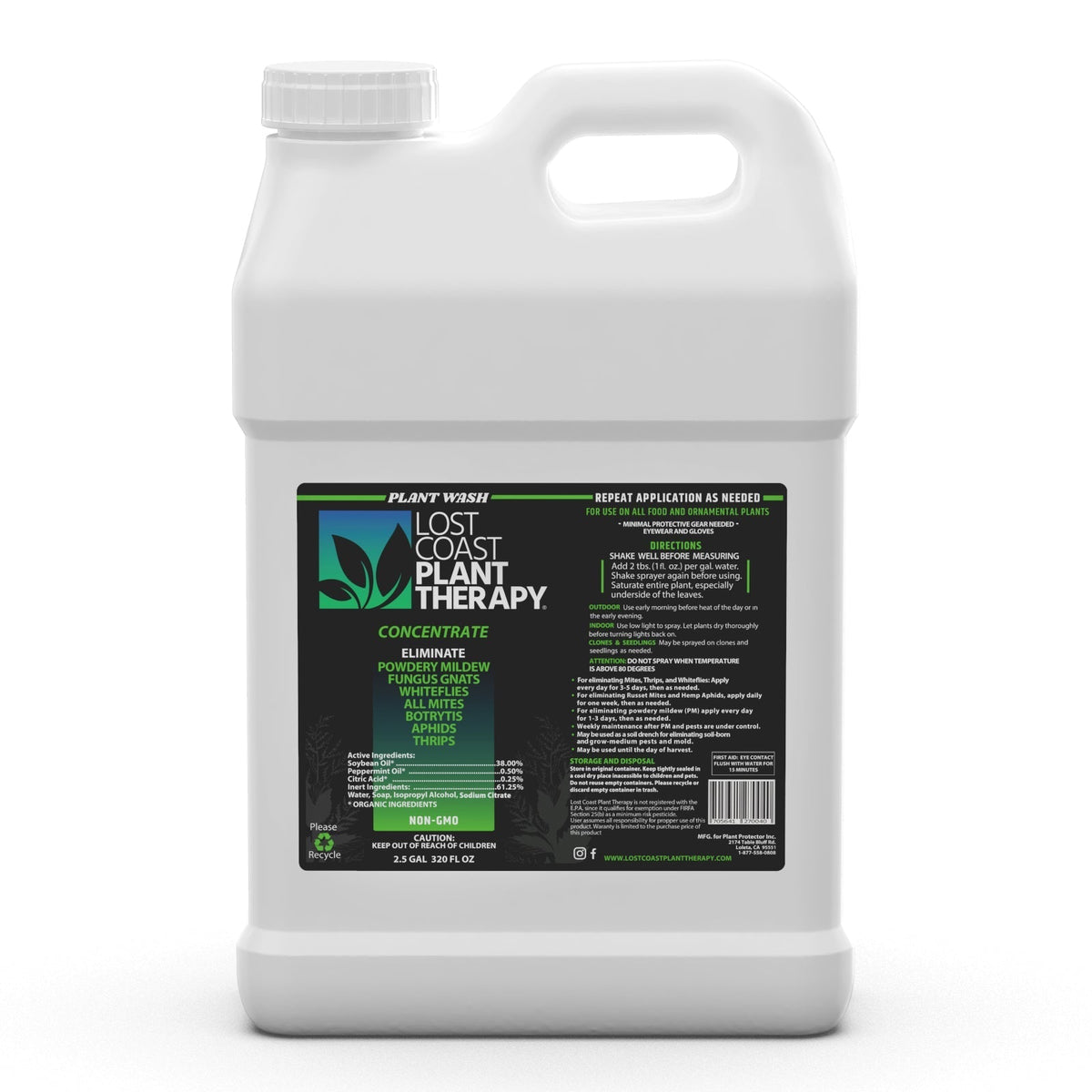
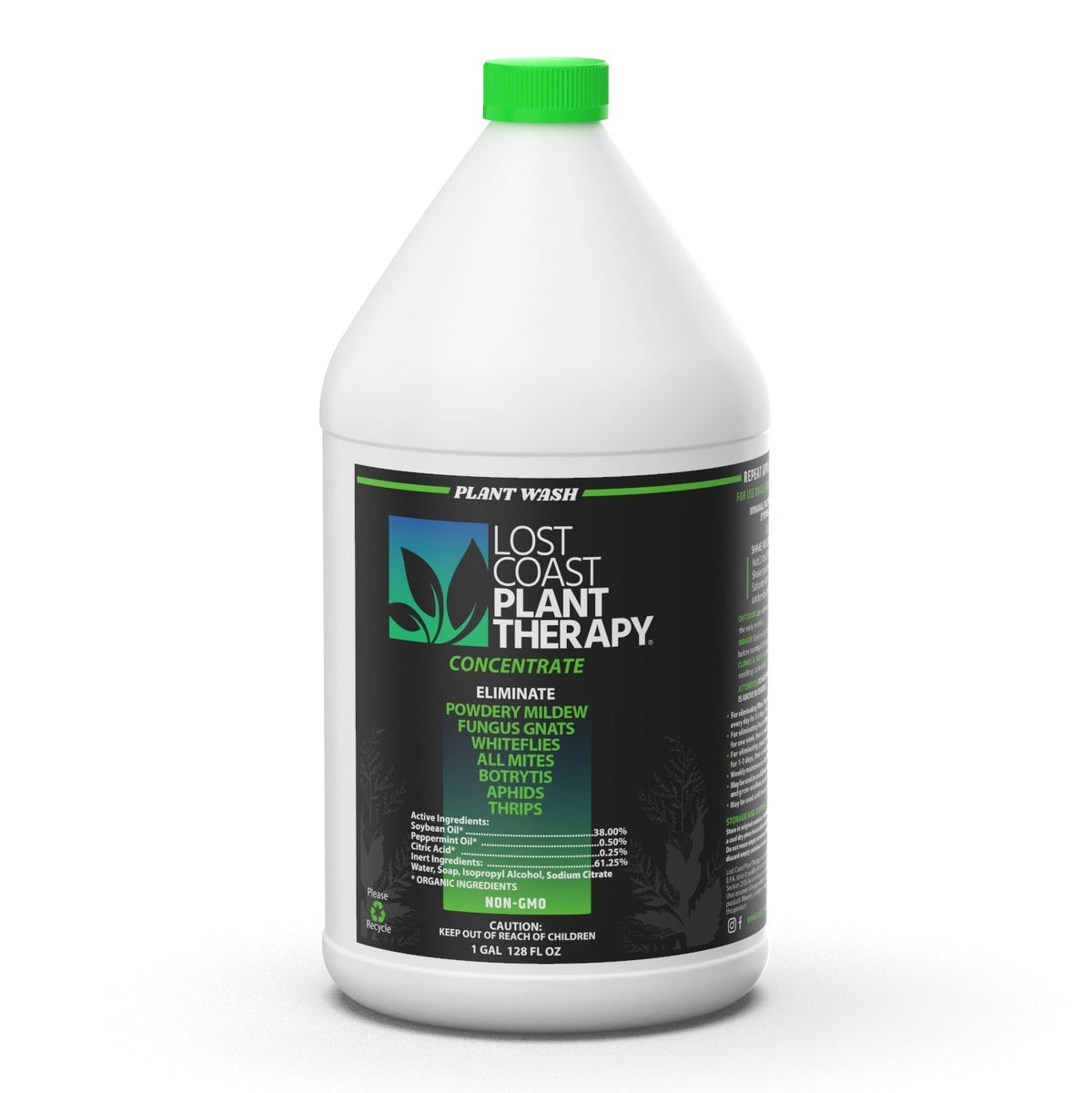
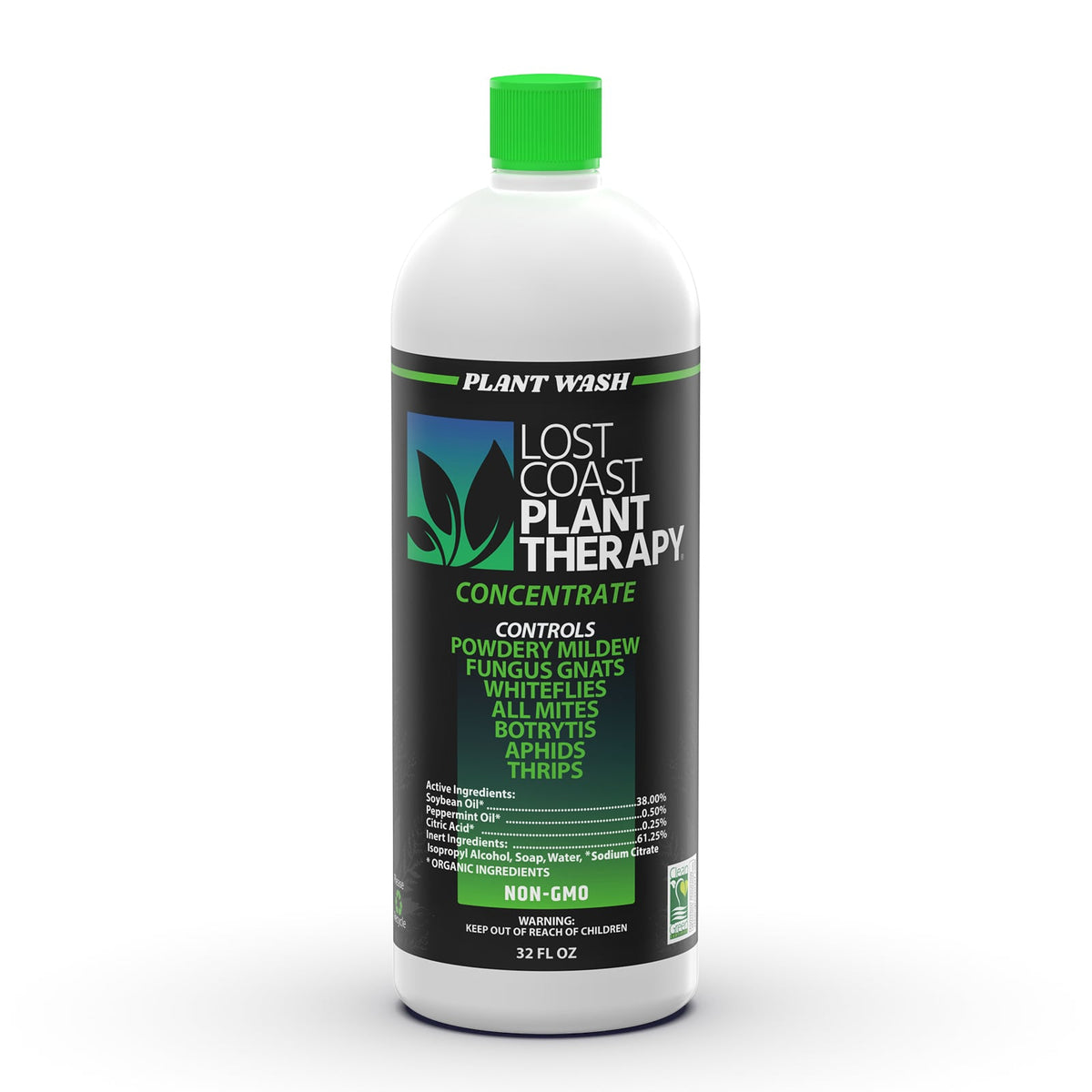
Lost Coast Plant Therapy® is a natural 3-in-1 insecticide, fungicide and miticide concentrate made in California, USA — the manufacturer's own designation for the product. It is built from three food-grade actives: organic non-GMO soy oil, organic peppermint essential oil and plant-derived citric acid. It controls soft-bodied insects, mites and surface fungal pathogens on contact, through a purely physical mechanism, and may be applied up to the day of harvest.
For licensed cultivation in Thailand this is the property that matters most: zero pre-harvest interval, 0-hour re-entry interval, and a food-grade residue profile. It is the tool you can still reach for in week 8 of flower, when almost nothing else in the cabinet is available to you.
Price — commercial rate
| Size | Manufacturer MSRP | Your price (commercial) | Saving | Cost per litre of finished spray |
|---|---|---|---|---|
| 1 L | 2,925 ฿ | 975 ฿ · −25% | ≈ 22.9 ฿/L | |
| 4 L | 9,375 ฿ | 3,125 ฿ · −25% | ≈ 18.3 ฿/L | |
| 10 L | 18,000 ฿ | 6,000 ฿ · −25% | ≈ 14.1 ฿/L |
MSRP is the manufacturer's recommended retail price. Every customer is served at the commercial rate above — no account application, no minimum order. Cost per litre of finished spray is calculated at 1 fl oz per US gallon (1:128). Ex-warehouse Bangkok, excluding delivery.
Rated 4.8★ by 22,000+ growers — figure published by the manufacturer on lostcoastplanttherapy.com (retrieved 15 September 2026); platform not disclosed, not independently verified by AZ Growshop.
What it controls
Soft-bodied insects and mites: spider mites · russet mites · broad mites · aphids · hemp aphids · root aphids · thrips (including western flower thrips) · whiteflies · mealybugs · scale insects · psyllids · leafhoppers · fungus gnats · cabbage moths · pill bugs.
Surface fungal pathogens: powdery mildew · botrytis (bud rot) · mould · leaf rust · blight.
Effectiveness is a function of contact. The manufacturer notes that the smaller the organism, the faster the formula acts — larger soft-bodied insects take longer and may need repeat application. Identification photos and field notes for all twelve targets →
Mode of action — and why it has no resistance group
The formula works mechanically, not biochemically. Soy oil adheres to the target insect, egg case or larva and disrupts respiration and digestion while the formulation penetrates and dehydrates the body. Against fungal pathogens, citric acid alters the pH of the plant surface so it becomes inhospitable to spores, while the wash action removes existing surface growth.
Because the mechanism is physical, there is no biochemical site of action for a pest population to adapt around — the product does not belong to any IRAC or FRAC resistance group. That makes it a rotation partner rather than a competitor to your conventional chemistry: alternating a physical-action product into a programme breaks selection pressure that otherwise builds resistance to the actives you rely on. Any agronomist building a resistance-management plan will recognise the value of a non-grouped mode of action in the rotation.
Third-party trial data — Cornell University
Trials conducted by Cornell University's College of Agriculture and Life Sciences across tomato, melon, hemp and lettuce reported:
- 96% +/- efficacy against powdery mildew — assessed by leaf-disease scores and repeated observation over 14 days, plus Area Under Disease Progression Curve.
- 95% +/- efficacy against total western flower thrips and all soft-bodied insects — assessed by feeding-damage ratings, on-plant counts and a final shake test.
Results were calculated using Abbott's formula, with statistical analysis by ANOVA and Tukey's HSD. These figures are the manufacturer's published account of the Cornell trials; the underlying study is not published on the manufacturer's website. AZ Growshop reproduces them as reported and has not reviewed the raw trial data.
Dilution and application
| Programme | Rate | Interval |
|---|---|---|
| General foliar — start here | 2–6 tbs (1–3 fl oz) per 1 US gallon (≈ 3.8 L) water. Begin at the lowest rate. | As needed |
| Preventative / weekly maintenance | 1 fl oz per gallon | Weekly |
| Extreme infestation | 1–3 fl oz per gallon | Every other day for 7–10 days |
| Russet mites & hemp aphids | 2 fl oz per gallon | Daily for 1 week, then as needed |
| Powdery mildew & botrytis | 1 fl oz per gallon | Daily for 1–3 days, then as needed |
| Soil drench — fungus gnats, root aphids | 1 fl oz per gallon through the medium | Every other day for 3–5 days |
| Clone & seedling dip | As per foliar rate; agitate every few minutes | Before transplant |
For heavy pressure the manufacturer also permits adding 1–3 fl oz of isopropyl alcohol per gallon of finished mix. Test on a single plant first.
Coverage decides the result. Saturate the entire plant, especially the underside of leaves and the stem. Anything the spray does not physically touch is not treated. Frequency beats concentration — the manufacturer's guidance is that most growers get better results from more frequent applications at 1 oz/gal than from raising the rate.
Application window — read before spraying
- Do not spray when the temperature is above 80 °F (≈ 27 °C). This applies to every application — and in Thai conditions it is the single most common reason a programme causes leaf stress.
- Outdoor: early morning before the heat of the day, or at dusk.
- Indoor: apply under low light and let plants dry thoroughly before lights come back on.
- Dries in about 15 minutes. Re-entry interval 0 hours.
- No wetting agent required — and the manufacturer states it performs best used on its own. Test on a single plant before tank mixing with nutrients or other IPM inputs, and space applications apart.
- Storage: out of direct sunlight, cap tightly.
- Handling: eye protection and gloves. Keep out of eyes, mouth and nose; if in the eyes, flush with water for 15 minutes. Keep out of reach of children.
Beneficials and biological programmes
The manufacturer states the formula is safe for bees, ladybugs and praying mantises when used as directed. Because it is a contact product with no residual activity, predatory mite and beneficial-insect releases can be scheduled after the spray has dried rather than abandoned — but time releases so beneficials are not present during application, since a contact product cannot distinguish what it lands on.
Coverage per container
| Pack | Finished spray at 1 oz/gal (1:128) | At 2 oz/gal (1:64) |
|---|---|---|
| 1 L | 128 L | 64 L |
| 4 L | 512 L | 256 L |
| 10 L | 1,280 L | 640 L |
Why it fits a GACP programme
- No pre-harvest interval to document — usable to the day of harvest, so late-flower pressure does not force a choice between the crop and the compliance file.
- 0-hour re-entry interval — no room downtime, and a clean worker-exposure record.
- Food-grade and cosmetic-grade inputs only, with every ingredient on the US EPA's FIFRA Section 25(b) minimum-risk list — a residue profile you can defend to a buyer's lab.
- Lot-level certificate of analysis for batch traceability records.
- Manufacturer Safety Data Sheets published for both concentrate and working dilution — drop straight into your chemical register.
- Certifications: Clean Green Certified · CCOF Approved (California Certified Organic Farmers) · Demeter Biodynamic Certified.
- Legally imported and sold in Thailand under Department of Agriculture (กรมวิຊาการเกษตร) documentation — certificate supplied per customer for GACP files.
Full ingredient disclosure
Actives: soy oil (organic, food grade, non-GMO) · peppermint essential oil (organic, food grade, never synthetic) · citric acid (organic, food grade, plant-derived from cassava root).
Inerts: plant-derived soap (eco-certified proprietary blend) · isopropyl alcohol (cosmetic grade) · sodium citrate (food grade) · water (reverse-osmosis purified).
Not in the formula: no sodium lauryl sulfate, no sodium laureth sulfate, no synthetic or GMO-derived ingredients.
The manufacturer does not publish percentage concentrations for the actives.
Documents
- Safety Data Sheet — Concentrate (PDF, English)
- Safety Data Sheet — Ready-to-Use Dilution (PDF, English)
- Certificate of analysis for your lot · DOA documentation · full spray programme by target organism — issued per customer, not published. Message AZ Growshop on our LINE Official Account with your order or lot number and we will send the technical pack for the exact batch you received, in the form your GACP auditor needs.
A note on the Safety Data Sheet: the concentrate carries a flammability notice because pure isopropyl alcohol requires that labelling at 8 oz and above, and pure citric acid and pure plant soap are each classified as irritants in undiluted form. At the working rate the concentrate is diluted 1:128 — which is why a separate SDS exists for the ready-to-use dilution.
Traceability and shelf life
- Shelf life: 24 months from the manufacture date printed on the container.
- Lot traceability: every batch is produced against a lot number with a matching certificate of analysis covering density, odour, phase separation and appearance.
- Separation is normal. The formula is specified to separate into two clear layers when it stands motionless — that is a pass condition on the certificate of analysis, not a fault. Shake before measuring.
What this product does not do
Stated plainly, because a programme built on the wrong assumption fails:
- Not systemic — it does not move inside the plant and cannot reach anything the spray misses.
- No residual activity — once dry, its work is done. Ongoing protection means repeat applications on a schedule, not one heavy pass.
- No effect on eggs the spray does not reach, which is why intervals of 2–3 days across a life cycle matter more than concentration.
- Hard-bodied insects are outside its range — it is a soft-bodied and mite tool.
- It is not a substitute for sanitation, airflow, humidity control, scouting and a properly built IPM programme. It is the contact layer inside one.
Technical support from AZ Growshop
Every order comes with the part a label cannot give you: dilution worked out against your water and tank sizes, a spray calendar fitted to your crop cycle and lighting, a rotation plan that places this product between your conventional actives for resistance management, and documentation support for GACP files. Licensed GACP farms are our primary customer segment and these programmes are built for that setting.
Ex-warehouse Bangkok · excluding delivery.